
Know the herbs
Scientific name
Blumea balsamifera (L.) DC.Family
Asteraceae (Compositae)Local name
Sembung, sembong, capa, capar, kesembung, cape, caper, capor, sembing, semboh, telinga kerbau, daun sembung, sapu.Description
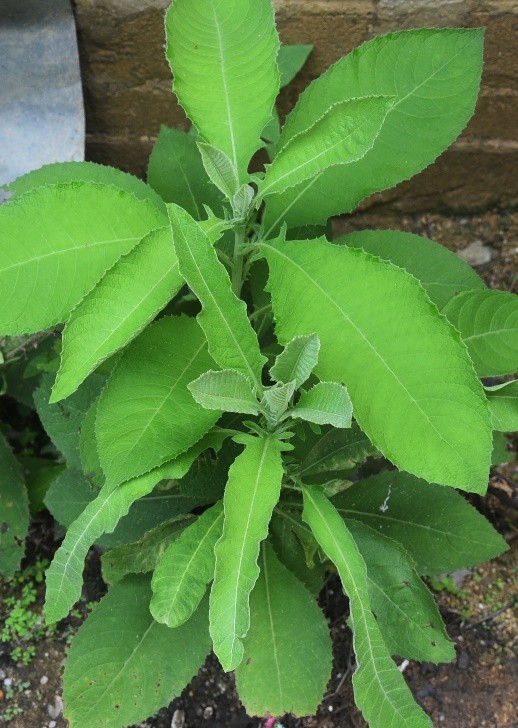
Blumea balsamifera (L.) DC. is a shrub reaching a height of 4rm. The stem grows upright, square-shaped, green covered with villous hairs. The leaves are arranged alternately, elliptical, the margin is fibrous to serrated, the base is cuneate to obtuse, the apex is subacute to acuminate, the indumentum is soft and densely hairy on both surfaces of the leaves, producing an aromatic smell when crushed. The petiole has three pairs of lobes, elliptical in shape. The panicle flower clusters are large, with many compound heads at the terminal or axillary position with the presence of many small elliptical leaves. The involucre is campanulate, the phyllaries are 4-5 serrate, linear to lanceolate, green, densely hairy. The florets are yellow, tubular. The flower heads and florets are uniform in size and shape regardless of habitat. The fruit is an achene, notched, oblong-obovoid, pubescent, the pappus is reddish yellow.
Usage
Sembung is used as a mother's bath after childbirth, stove liner, flower bath preparation, herbal bath, massage oil ingredient, increases body freshness, relieves swelling, jaundice, treats shingles, stroke, fractures, hemorrhoids, menstrual cramps, gastritis, constipation, blood purifier, expels wind in the body, treats nerve pain, controls blood glucose levels, complementary treatment for kidney problems and tumors.
Malaysia Herbal Monograph (source: Globinmed)